How to Choose a Reliable Marble Exporter in India: A Buyer's Guide
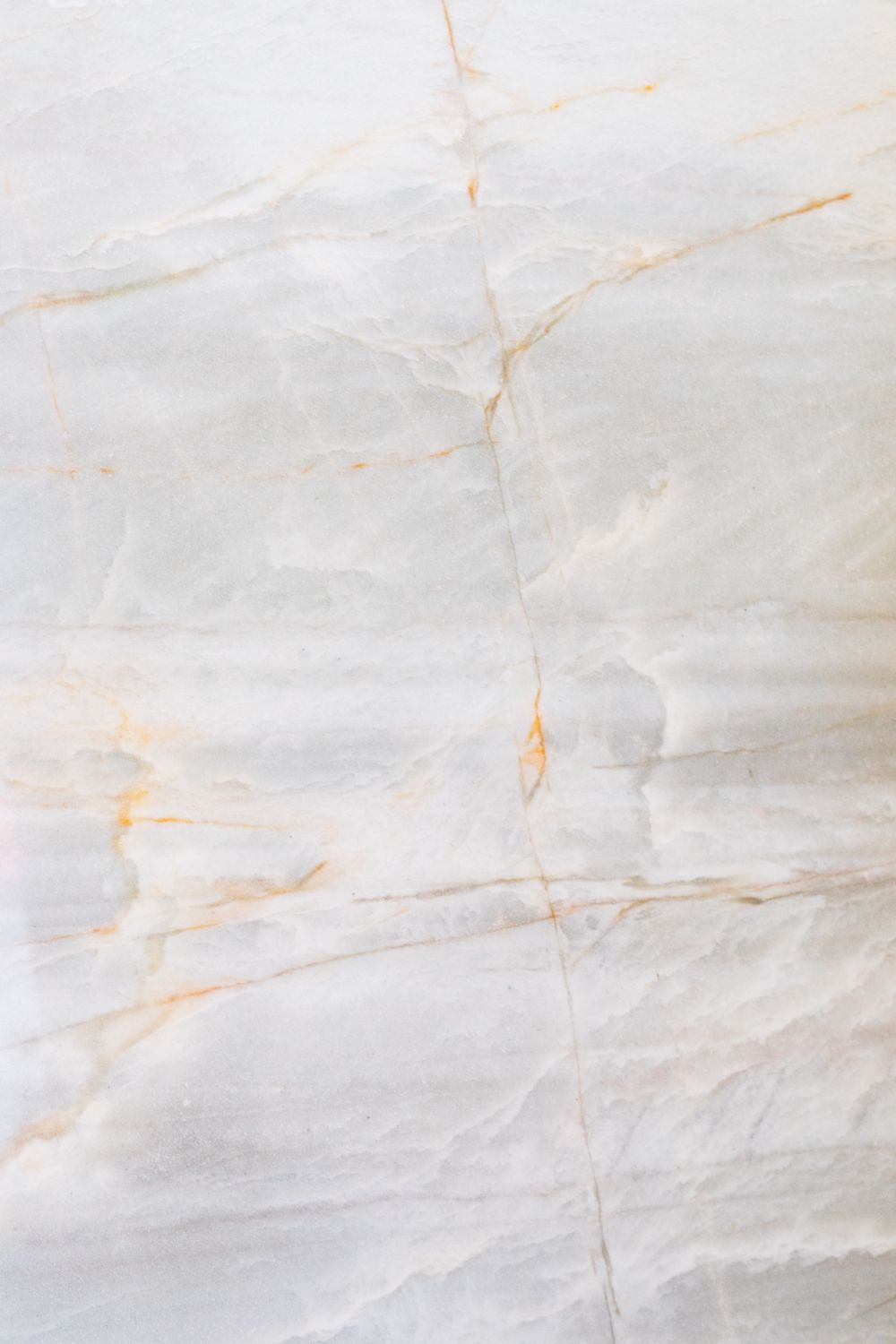
India isn't just a large marble producer — it's the largest. Rajasthan alone produces more than 40 million metric tons of marble annually, making the state, on its own, the biggest marble-producing region on earth. At the center of it is Kishangarh, widely recognized as Asia's largest marble and granite market, with a complete stone ecosystem spanning mining, gangsaw processing, storage and export — all in one place.
If you're evaluating a marble exporter in India for the first time, that scale is exactly why India deserves serious consideration. But scale can also make sourcing confusing: with thousands of quarries, processing units and trading companies across Rajasthan, how do you actually find a reliable partner rather than getting lost in a sea of near-identical listings? This guide walks through it.
Sourcing marble for your next project?
We export direct from the Makrana Marble Zone in Kishangarh — factory pricing, export-grade QC, and transparent documentation.
Request a Quote →Why India Dominates Global Marble Production
India's marble industry has geology on its side. The Aravalli mountain range running through Rajasthan holds some of the world's most significant marble deposits, giving rise to well-known varieties like Makrana white marble — the same stone historically used to build the Taj Mahal — alongside Indian green marble, beige/botticino-style marble, and a wide range of black and multicolor varieties quarried across Rajasthan, Gujarat and parts of Andhra Pradesh.
The Indian marble market was valued at roughly USD 20.8 billion in 2024 and is projected to grow toward USD 26 billion by 2029, reflecting both strong domestic construction demand and steady growth in export volumes. Recent trade data shows India exporting well over 150,000 marble shipments annually, sourced from thousands of registered exporters — a sign of a mature, high-volume export infrastructure rather than a handful of boutique suppliers.
Where Indian Marble Actually Goes
Indian marble exporters ship most heavily to the United States, the United Kingdom, and Australia, with steady demand also coming from the Middle East and parts of Europe. Interest has grown particularly strong in processed and value-added marble products — pre-cut slabs, tiles, and finished countertop blanks — rather than raw blocks, as international buyers increasingly want material that requires minimal additional fabrication once it arrives.
Understanding Marble Types Before You Buy
"Marble" is often used as a catch-all term, but the category spans a wide range of colors, patterns and price points. A few of the most commonly exported Indian varieties:
- Makrana White — a dense, pure white marble historically prized for monuments and high-end interiors; among the most premium and consistent Indian varieties.
- Indian Green Marble — a deep green stone with distinctive veining, popular for statement flooring, wall cladding and decorative inlay work.
- Beige / Botticino-style Marble — warm, neutral-toned marble widely used in both residential and commercial interiors for its versatility.
- Black Marble — dramatic, high-contrast stone often used for accent walls, countertops and luxury detailing.
- Multicolor / Fantasy Marble — highly patterned stone with dramatic veining, typically used as a design centerpiece rather than a large-format surface.
Each variety behaves differently in terms of porosity, veining consistency and finish options (polished, honed, leathered) — which is why sending a clear specification, rather than just a color name, dramatically improves the accuracy of the quotes you receive.
Not sure which marble fits your project?
Browse available colors, finishes and slab sizes currently in stock for export.
Browse Marble Catalog →Blocks vs. Slabs vs. Cut-to-Size Tiles
One of the biggest decisions a buyer makes early on is what form of marble to import:
- Raw blocks — suit buyers who have their own gangsaw and fabrication capacity at destination, offering maximum flexibility but requiring significant downstream processing investment.
- Slabs — gangsawn and often polished at origin, these are the most common export format for countertop fabricators and stone distributors, balancing flexibility with reduced processing burden.
- Cut-to-size tiles — precision-cut to standard dimensions (such as 600x600mm, 610x610mm, or custom sizes), ready for direct installation with minimal on-site fabrication. A cut-to-size marble slabs exporter that can hold tight dimensional tolerances is especially valuable for large-scale flooring projects where consistency across thousands of tiles matters more than any single showpiece slab.
For most flooring and wall-cladding projects, cut-to-size and finished slabs reduce total landed cost once you account for fabrication labor at destination — even though the per-square-meter export price is higher than raw block.
How Marble Export Pricing Actually Works
Marble pricing is driven by a combination of factors that buyers should understand before comparing quotes:
- Rarity and veining pattern — highly patterned or rare-colored marble commands a significant premium over more uniform, commonly available stone.
- Block size and yield — larger, more consistent blocks yield more usable slab per cut, which affects pricing efficiency.
- Finish — polished marble is generally the baseline; honed, leathered, or brushed finishes typically add cost due to additional processing steps.
- Thickness — standard slab thickness (18mm and 20mm are common export standards) affects both material cost and freight weight.
- Order volume — as with tiles, full-container orders unlock significantly better per-unit pricing than partial or sample-volume orders.
Always request FOB pricing from an Indian port (commonly Mumbai, Kandla or Mundra depending on origin state) alongside CIF pricing to your destination port — comparing exporters on the same basis avoids the common trap of one quote looking cheaper simply because it excludes freight.
Quality Control: What to Verify Before You Commit
Natural stone has inherent variation — that's part of its appeal — but there's a meaningful difference between natural variation and inconsistent quality control. Before finalizing an order, verify:
- Physical sample approval. Always request a physical sample, not just photos, since screen color rendering is notoriously unreliable for natural stone.
- Batch consistency. Ask how the exporter ensures slabs within your order come from the same or closely matched blocks, to avoid visible shade mismatch once installed.
- Crack and fissure inspection. Marble can have natural fissures that are cosmetically fine but structurally weak; a reputable exporter inspects for and discloses these before shipment.
- Packaging for ocean freight. Slabs should be shipped in reinforced wooden crates with edge protection — marble breakage in transit is almost always a packaging failure, not a material defect.
Request physical samples before you order
Tell us your color, finish and volume requirements and we'll arrange samples from current stock.
Contact Our Export Desk →Documentation Every Marble Export Should Include
- Commercial invoice and detailed packing list (including slab counts, dimensions and crate numbers)
- Certificate of Origin
- Bill of Lading
- Quality/inspection report, ideally with photos of the actual slabs being shipped
- Fumigation certificate for wooden crating
For large or first-time orders, it's reasonable to request a pre-shipment inspection — either conducted by the exporter with photographic evidence, or via an independent third-party inspector — before the container is sealed.
Common Mistakes Buyers Make When Importing Marble
- Approving on photos alone. Marble's veining and undertone shift dramatically under different lighting and screen calibration — always confirm with a physical sample before locking in a bulk order.
- Not accounting for natural variation. Unlike engineered stone, no two marble blocks are identical. Set realistic expectations with your end customer about slab-to-slab variation rather than promising perfect uniformity.
- Underestimating fabrication needs. Raw blocks look cost-effective on paper but require significant cutting and polishing capacity at destination — factor that cost in before comparing block pricing to finished slab pricing.
- Skipping a trial order. For a new exporter relationship, a smaller trial shipment — even at a slightly worse per-unit price — is a cheap way to validate quality and reliability before committing to a full annual supply agreement.
Finish Options and What They're Best Suited For
| Finish | Look & Feel | Best For |
|---|---|---|
| Polished | High gloss, reflective | Interior floors, feature walls |
| Honed | Matte, smooth | High-traffic floors, contemporary interiors |
| Leathered | Textured, low-sheen | Countertops, outdoor-adjacent surfaces |
| Brushed | Softly textured, antique look | Rustic or traditional-style interiors |
If your target market or end customer hasn't specified a finish, polished remains the safest default — it's the most widely stocked, fastest to source, and easiest to match across multiple slabs for large orders.
Why Kishangarh, Rajasthan Specifically Matters
Because Kishangarh functions as a complete stone ecosystem — quarrying, gangsaw processing, polishing, storage and export logistics all located in one hub — exporters based there typically offer faster sampling, broader color/finish variety, and more competitive pricing than fragmented suppliers who need to source material from multiple disconnected regions. If an exporter's operations are physically based in or near Kishangarh, that's generally a positive signal for both product range and logistics reliability.
Related Reading
Frequently Asked Questions
What's the difference between Indian marble and Italian or Turkish marble?
The core mineral composition is similar, but sourcing region affects color range, veining style and price. Indian marble — particularly Makrana white and Indian green — offers comparable quality to many European varieties at a significantly lower landed cost, which is a major reason for its growing global market share.
What thickness should I order for flooring vs. countertops?
18mm is a common standard for flooring applications, while countertops typically use 20mm or thicker slabs for structural strength, though exact requirements depend on local building codes and fabrication practices.
How long does a marble export order typically take?
Similar to tiles: expect roughly 3–5 weeks for sourcing, cutting/finishing and documentation, plus 3–6 weeks of ocean transit depending on destination — so 6–11 weeks door-to-door is a realistic planning window.
Can I order a mix of colors and finishes in one container?
Yes — most exporters support mixed-SKU containers, which is particularly useful for distributors and retailers who need variety rather than a single uniform product.
Is Indian marble suitable for outdoor applications?
Some varieties are, but marble is generally more porous and acid-sensitive than granite, so it's better suited to interior floors, walls and countertops than exposed outdoor paving in most climates. If your project is outdoor-facing, ask your exporter specifically about porosity ratings and sealing recommendations, or consider granite as an alternative for that particular application.
Do I need an import license to bring in marble from India?
Requirements vary by country. Most commercial importers in the US, UK, EU, Australia and Canada can import natural stone under standard commercial import procedures, though it's worth confirming any destination-specific tariff classifications or environmental documentation requirements with your customs broker before your first shipment.
India's marble industry combines geological abundance with genuinely mature export infrastructure — but as with any natural stone sourcing decision, the outcome depends heavily on which specific exporter you choose, not just which country. Prioritize physical samples, documented quality control, and clear, itemized pricing, and India's scale becomes a real advantage rather than a source of confusion.
Ready to request a formal quotation?
Register as a buyer and submit your RFQ with your color, size and volume requirements.
Get a Formal Quote →