Morbi, Gujarat: Inside India's Ceramic Tile Export Hub
Ask anyone in the global tile trade where Indian ceramic tiles actually come from, and the answer is almost always the same word: Morbi. This mid-sized city in Gujarat, largely unknown outside industry circles a generation ago, is now the beating heart of India's tile export economy — a single district export hub that ships tiles to more than 150 countries and anchors India's position as the world's second-largest ceramic tile exporter, trailing only China.
If you're evaluating suppliers, understanding how the Morbi cluster actually works — its scale, its logistics through Mundra port, and why quality varies so much between factories in the same 40km stretch — will make you a dramatically better buyer.
Source directly from Gujarat's export hub
We work with vetted, export-grade manufacturing partners across the Morbi cluster — so you get factory pricing without factory-hunting.
Request a Quote →What Makes Morbi the World's Third-Largest Ceramic Cluster
Morbi is frequently described as the third-largest ceramic industry cluster in the world, and the numbers behind that claim are genuinely striking. The cluster is home to more than 800 tile factories packed into roughly a 40km by 7km industrial corridor, with a combined installed capacity of around 4 million square meters of tiles per day. Gujarat as a state accounts for roughly 70% of India's total ceramic tile output, and within Gujarat, Morbi alone is responsible for more than 90% of that production.
The scale supports direct and indirect employment for over 600,000 people — everything from raw material (clay, feldspar, silica) processing and kiln operations to design, glazing, quality inspection, packaging and logistics. For buyers, this concentration is the single biggest reason Morbi outcompetes fragmented tile industries elsewhere: component suppliers, machinery vendors, mold makers, and freight forwarders are all located within a short drive of each other, compressing both lead times and cost.
Why "Morbi Gujarat Ceramic Tiles Export Hub" Is More Than a Marketing Phrase
India's ceramic tile exports have grown from around 55 million square meters in 2013 to nearly 590 million square meters a decade later — a roughly tenfold increase, almost entirely driven by Morbi's expansion. In value terms, India's ceramic tile exports rose from approximately ₹17,550 crore in 2021 to around ₹20,000 crore (about USD 2.3 billion) by 2024, even after accounting for a volume dip that year following a stronger 2023.
Porcelain tiles specifically — the premium, denser category increasingly favored by international buyers — now make up roughly 70% of export volumes from the cluster, a clear signal that Morbi's manufacturers have moved decisively upmarket rather than competing purely on low-cost ceramic.
The Mundra Port Connection: Why Logistics Matter as Much as the Product
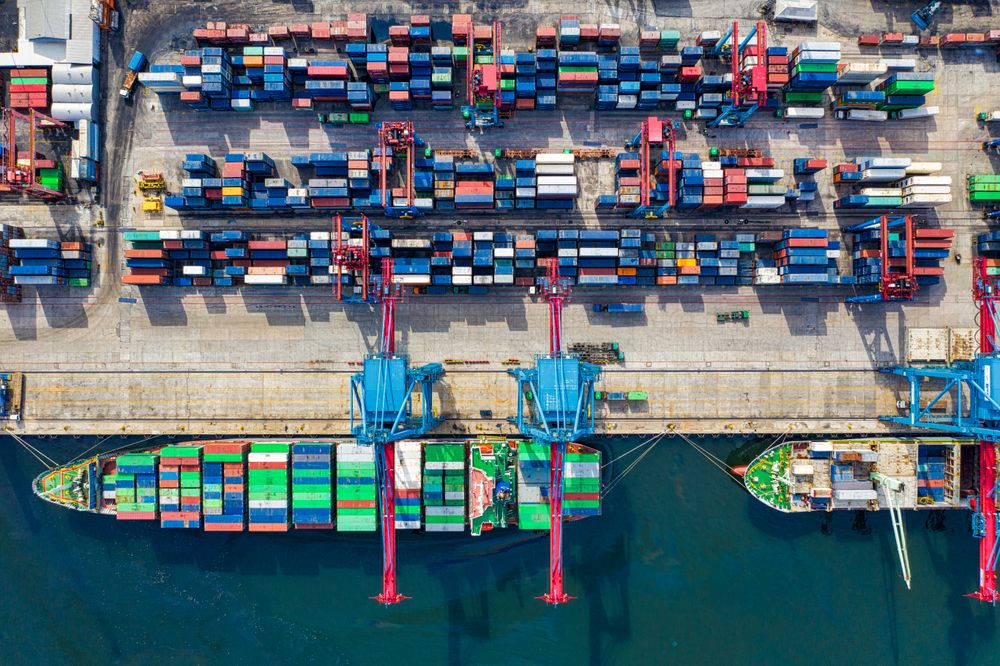
One detail buyers rarely appreciate until they've shipped a container themselves: Mundra port in Gujarat handles the overwhelming majority of Morbi's tile exports — reports put the figure above 95% of cluster export volume — almost entirely because of geographic proximity. Factories in Morbi are close enough to Mundra that logistics costs run an estimated 20–25% lower than they would through more distant ports, and the corridor is busy enough that roughly 1,500 export containers leave the region every single day.
This matters to you as a buyer in three concrete ways:
- Faster, more predictable transit — established, high-volume shipping lanes mean fewer scheduling surprises than with lower-volume regional ports.
- Lower landed cost — logistics efficiency gets passed through in FOB pricing more than buyers often realize.
- Consolidation flexibility — because so much volume flows through Mundra, it's easier to combine tiles with other stone products (marble, granite) in a single consolidated shipment.
Want a real case-study walkthrough?
Ask our export desk for a reference shipment — including transit time, documentation and container photos from a comparable order.
Talk to Our Export Desk →Top Export Destinations for Morbi's Tile Manufacturers
The United States has historically been the largest single destination for Indian ceramic tiles, at times accounting for 60–70% of Morbi's export volume, with Saudi Arabia and the UAE following as major buyers. More recently, the UAE has overtaken the US as the single largest destination market by volume, with Iraq and Russia also ranking among the top four markets — a reminder that Middle Eastern and construction-boom markets have become just as important as traditional Western demand.
This diversification is actually good news for buyers: it means Morbi's exporters have deep, current experience shipping to a wide spread of regulatory environments, climates, and building-code requirements, rather than being narrowly specialized in a single corridor.
Not All Morbi Factories Are Equal — What Separates the Reliable Exporters
Here's the part most articles about Morbi skip: with 800+ factories in one cluster, quality, compliance, and export professionalism vary enormously. Some factories are large, vertically integrated operations with in-house testing labs and decades of export experience. Others are smaller job-work units that produce for larger trading houses and have little direct visibility into how their product performs after loading.
When evaluating a ceramic tiles exporter in Morbi, look past the factory's size and ask specifically:
- Do they hold third-party test certification (SGS, Intertek or equivalent) for water absorption, breaking strength and PEI abrasion rating?
- Can they show export history to your specific target country, including sample commercial invoices or shipping documents?
- Do they conduct — and share evidence of — pre-shipment quality inspection before the container is sealed?
- Is their sales/export team able to communicate in your business language with clear, prompt RFQ turnaround?
A factory that ticks all four boxes is a fundamentally different partner than one that simply has the lowest quoted price per square meter.
How the Cluster Model Affects Pricing and MOQs
Because so much capacity sits within a tight radius, Morbi-based exporters can typically offer more competitive minimum order quantities than isolated regional manufacturers elsewhere — often starting around 500 sqm per SKU for LCL consolidation, with meaningfully better per-unit economics once you reach full-container volumes (roughly 700–900 sqm depending on tile size and box weight). Because multiple factories can often fulfill the same specification, buyers also have more room to negotiate on price and lead time than in less competitive manufacturing regions.
Recent Trends: Export Volume Recovery in 2025
After a volume dip in 2024 — exports fell to roughly 525 million square meters, down close to 11% year-on-year, following an unusually strong 2023 — the first nine months of 2025 showed a clear recovery, with overseas sales up nearly 8% compared to the same period the year before, reaching around 420 million square meters. For buyers, this signals healthy ongoing capacity and renewed international demand, rather than a cluster in decline — a reasonable question given the 2024 headline numbers.
Browse tiles sourced from India's top export cluster
See finishes, sizes and formats currently available for export-grade bulk orders.
View Tile Catalog →How Morbi Compares to Other Global Tile Manufacturing Regions
Buyers who have historically sourced from Spain, Italy or China often ask how Morbi actually stacks up. The honest answer is that each region plays a different role in the global market:
- China remains the largest producer and exporter overall, with enormous capacity and a wide product range, but rising domestic labor and compliance costs have pushed per-unit pricing up over the past decade, narrowing the gap with Indian pricing considerably.
- Italy and Spain continue to lead on high-design, luxury-tier porcelain and large-format slabs, particularly for architect-specified commercial projects, but at a price point that puts them out of reach for most volume-driven residential and mid-market commercial buyers.
- Morbi, India occupies the sweet spot between the two: manufacturing scale and cost efficiency closer to China, combined with a design and quality trajectory that has been closing the gap with European producers, especially in the GVT and large-format porcelain segments.
This is precisely why so many international distributors have added — or fully switched to — Indian suppliers over the past five years: the value equation on porcelain and vitrified tiles is difficult for competing regions to match at comparable volumes.
| Region | Typical Strength | Best Fit For |
|---|---|---|
| Morbi, India | Scale + cost efficiency + rapidly improving design | Volume buyers, distributors, mid-to-premium projects |
| China | Massive capacity, broad range | Very large, standardized orders |
| Italy / Spain | Design leadership, luxury finishing | Architect-specified, high-end commercial |
A Practical Sourcing Checklist for the Morbi Cluster
- Start with the spec, not the factory. Define size, finish, PEI rating and volume before you start comparing suppliers — it prevents apples-to-oranges quotes.
- Request lab reports, not just marketing claims. "Export quality" is a phrase every factory uses; a dated SGS or Intertek certificate is what actually verifies it.
- Ask who handles Mundra port logistics. Exporters with in-house freight coordination generally hit schedules more reliably than those outsourcing every step.
- Confirm packaging standards for ocean freight. Ask specifically about box reinforcement, palletization and corner protection — breakage claims are disproportionately a packaging issue, not a product-quality one.
- Get a second, independent quote. Because the cluster is so competitive, a second quote is a fast, low-cost way to sanity-check pricing and lead time claims.
Related Reading
Frequently Asked Questions
Is Morbi the same as "Gujarat ceramics" more broadly?
Essentially, yes. While Gujarat has ceramic activity in a few other pockets, Morbi is responsible for the overwhelming majority — reports suggest over 90% — of the state's tile output, which is itself roughly 70% of India's national production.
Why does almost everything ship through Mundra port specifically?
Proximity and infrastructure. Mundra's distance from Morbi is short enough to meaningfully lower trucking costs, and decades of tile-export volume have made it the most efficient, best-scheduled port for this specific cargo type.
Is buying directly from a Morbi factory always cheaper than going through an export company?
Not necessarily. Many factories rely on export-focused partners for documentation, quality inspection, and freight coordination — services that reduce your risk even if the headline FOB price is marginally higher than a factory-direct quote with none of that support.
How do I verify a Morbi exporter's claims before placing a large order?
Ask for dated lab test certificates, references from buyers in your target country, and — for larger first orders — consider a third-party pre-shipment inspection service to physically verify the container before it sails.
Morbi's scale is real, and it's the reason India competes credibly with China on ceramic tile exports. But scale alone doesn't guarantee quality — the buyers who get the best outcomes are the ones who treat "Morbi" as a starting point for due diligence, not a substitute for it. Whether you're a first-time importer bringing in a single trial container or an established distributor scaling up an existing supply relationship, the fundamentals stay the same: verify the factory, verify the paperwork, and verify the shipment before it leaves port.
Get a vetted quote from the Morbi cluster
Skip the factory-hunting — tell us your spec and volume and we'll return export-ready pricing.
Request a Quote →